Adoquinado Málaga Español
Adoquinado Málaga

Block paving contractor for homes, villas and communities across Málaga province

In shortAdoquinado Málaga lays block paving throughout the province of Málaga: concrete pavers, natural stone setts, clay pavers, permeable paving and grass grids, together with kerbs and the base underneath. We also lift tired paving and replace it. The work is carried out by a registered autónomo based in Marbella, communication can run entirely in English, and owners living abroad receive photo updates as the job progresses.

Send us a photo and the approximate m² – free, no-obligation quote

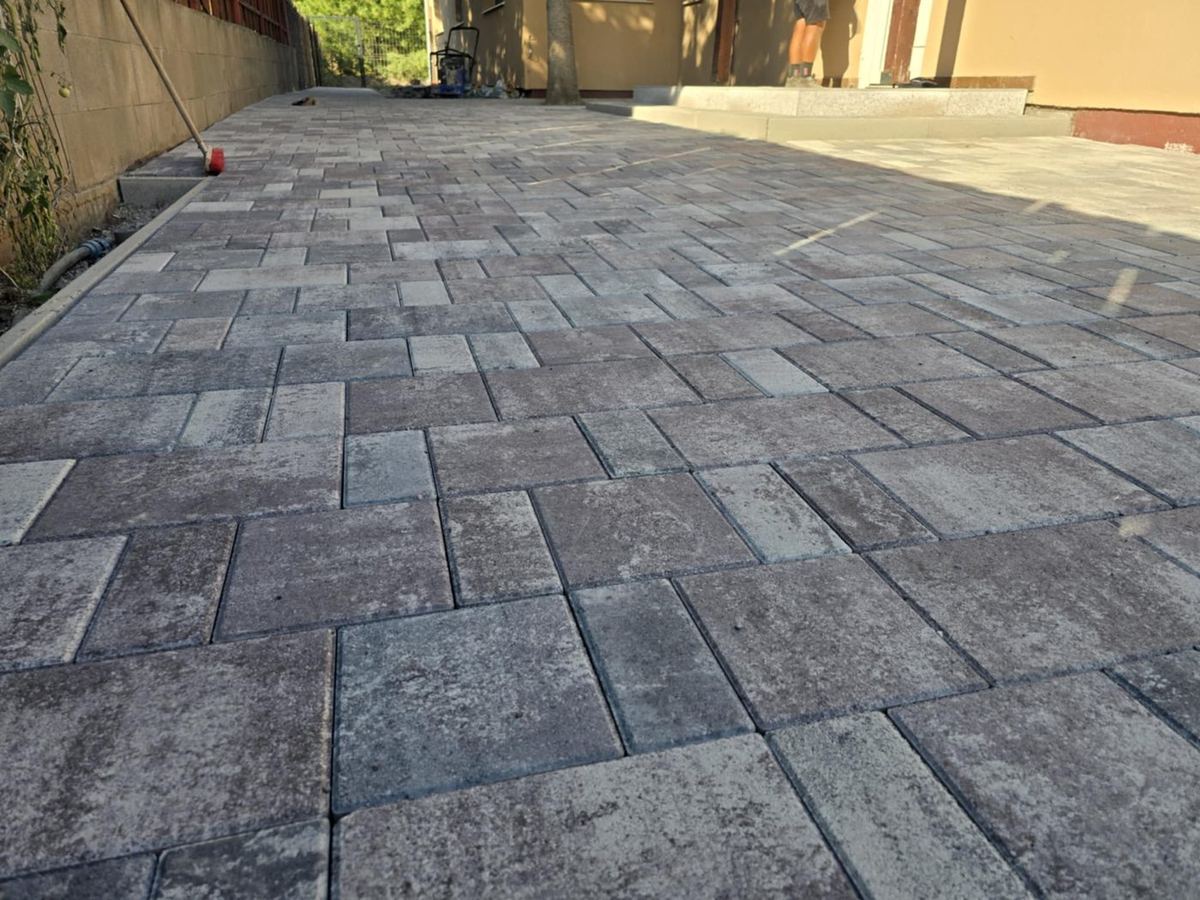
Rectangular block paved driveway in grey-brown tones
Finished rectangular block paving in blended grey and brown tones

What exactly does Adoquinado Málaga do?

We supply and lay block paving for private houses, villas, communities of owners and small businesses anywhere in Málaga province. A typical job covers the whole build-up: digging out, preparing and compacting the sub-base, edging, the laying bed, the paving itself, jointing and final compaction. The aim is a surface that stays level, sheds rainwater and looks right next to the house for a long time.

Block paving, called adoquinado in Spanish, means a floor made of individual small units rather than one continuous slab. Because every block can move very slightly and be lifted again, a well-built paved area copes with ground movement, allows access to services underneath and can be repaired in sections instead of being broken out. That flexibility is the main reason so many drives and paths on the Costa del Sol are paved rather than poured.

This site is the general, province-wide part of a small network. Here you will find the materials we lay, how the base underneath is built and what happens when old paving has to come up. Specialist topics such as sunken areas, driveways, pool surrounds, surface renovation and prices each have their own site, linked wherever they genuinely help.

Which paving material suits a Costa del Sol property?

Most homes are well served by concrete block paving; natural stone suits historic or high-end settings, clay pavers suit a warm brick look, and permeable systems suit places where water needs to soak away. The right choice depends less on fashion than on how the area is used, how it drains and what surrounds it.

Concrete pavers are made in a wide range of sizes, colours and blends, and the standard that covers them, UNE-EN 1338 with its Spanish complement UNE 127338, gives a common reference for comparing products. Natural stone setts and slabs follow their own standards, UNE-EN 1342 and UNE-EN 1341, and clay pavers are covered by UNE-EN 1344. Knowing which standard applies helps you read a supplier's technical sheet with some confidence.

For a villa drive used daily by cars, we normally talk through concrete or stone. For a shaded courtyard with a fountain, stone or clay tends to sit more comfortably with the architecture. For a parking bay at the bottom of a garden, a grass grid or a permeable block may be kinder to the plot. Our guide comparing paving materials goes through each option side by side, and the article on choosing between concrete, stone and clay pavers looks at the same question from an owner's point of view.

Visual comparison of concrete, natural stone, clay and permeable paving1Concrete2Naturalstone3Clay /klinker4Permeable /grass grid
Visual comparison of concrete, natural stone, clay and permeable paving

Why does the base matter more than the blocks?

Almost every paving failure we are asked to look at starts below the surface. Blocks sink, rock or spread when the layers underneath were too thin, poorly compacted or allowed to hold water, so the base deserves as much attention in a quote as the choice of paver.

A conventional flexible build-up starts with the natural ground, followed by a layer of compacted granular sub-base, known locally as zahorra, a thin bed of grit or sharp sand, the blocks themselves and finally jointing sand brushed in and vibrated down. Where heavier use or poor ground calls for it, a bound layer such as soil-cement or a concrete slab can be added under the bed. Each layer has a job, and skipping one usually shows within a few seasons.

Typical layers under block paving, from natural ground to jointing sandPaverBedding layer (grit)Sub-base: granular / soil-cementCompacted groundEdge restraint (kerb)Sand-filled joints
Typical layers under block paving, from natural ground to jointing sand

Falls are the other half of the story. Rainwater has to run off the surface towards a channel, a drain or open ground rather than towards the house or into a low corner. The guide to layers and base explains the build-up in detail, and the guide to compaction and falls covers how water is managed. If you are weighing a granular base against a concrete one, see our page on the base under block paving.

Can worn-out paving be replaced without starting from scratch?

Yes, and very often only part of the job needs redoing. Old paving can be lifted, the base checked and corrected where necessary, and a new surface laid over the sound parts of the existing build-up; when the base itself has failed, it is rebuilt before any new blocks go down.

Not every tired surface needs replacing at all. If the problem is a few sunken patches, a repair is usually the sensible route, and our sister site for lifting and relaying sunken pavers deals with exactly that. If the paving is sound but faded or stained, a renovation of the existing pavers may be enough. Replacement makes sense when the units are broken, the pattern is obsolete or the whole area is being redesigned.

Decision tree: repair the base, renovate the surface or replace the pavingSinking or moving?Repair the baseOnly colour or wear?Restore without replacingBroken or obsolete?Replace the paving
Decision tree: repair the base, renovate the surface or replace the paving

When paving does come up, the rubble has to go somewhere legal. Construction and demolition waste in Spain is governed by Royal Decree 105/2008 and Law 7/2022, and the latter treats rubble from minor domestic building and repair works as household waste under municipal responsibility. Our page on replacing old paving explains how that is handled on a typical job.

How does the job run when you live abroad?

Many of the owners we work for spend part of the year elsewhere, so the process is designed to work at a distance. You can explain what you want in English, approve decisions by message and follow progress through photos without needing to be on site every day.

  1. Send a few photos of the area and the approximate square metres, plus anything you already know about drainage, access or the existing base.
  2. We arrange a site visit to measure, look at levels and discuss material, pattern and edging with you or with someone you nominate.
  3. You receive a written quote that lists the layers, the material, the edging and the waste removal, so it can be compared line by line.
  4. Before work starts we agree access, where materials will be stored and how neighbours or the community will be informed.
  5. During the job you receive photo updates at the key stages: dig-out, compacted base, edging, laying and jointing.
  6. At handover we walk the area with you or your representative, check levels and joints, and explain simple aftercare.

Being able to see the base before it is covered matters a great deal, because that is the part nobody can inspect afterwards. Photos of the compacted sub-base and the edging give you a record of what went into the ground, which is useful if the property is later sold or the community asks questions. The article on what to expect from first visit to handover describes the process in more detail.

Do you need town hall permission or a community vote?

Often a simplified procedure is enough, but it depends on the town hall and the type of work. In Andalusia, Law 7/2021 (LISTA), article 138.1.a), places minor works of limited constructive scope that do not need a project under a responsible declaration, and each town hall's ordinance decides exactly which procedure applies to a given job.

Málaga City Council's planning office has published lists of works handled by responsible declaration and works exempt from both licence and declaration; whether a particular paving job is on that list is something to check case by case. For Marbella, Estepona, Fuengirola, Benalmádena, Torremolinos, Mijas and the other towns, the procedure for a given outdoor paving job is laid down in the current municipal ordinance of each town. If the work touches the public pavement or a dropped kerb for a vehicle crossing, separate municipal authorisation is needed, on the terms of that town hall's ordinance.

In a community of owners, work on common elements such as shared paths or a communal car park needs a resolution of the owners' meeting under article 17 of the Horizontal Property Law, Ley 49/1960; the community administrator can confirm the exact majority for a given job. We execute the works; we do not draft projects or file planning applications, but we can describe the job clearly so the paperwork is easier. Our guide to permits and rules collects the relevant references.

What drives the cost of a block paving job?

The price per square metre is shaped mainly by the condition of the existing ground, the material chosen and how easy the site is to reach. Two jobs of the same size can differ considerably once access, slopes and waste are taken into account.

  • Total area, because set-up and machinery are spread over the square metres
  • Access for machinery, deliveries and skips, especially on hillside plots and narrow lanes
  • Whether old paving has to be lifted and how much rubble leaves the site
  • The state of the existing base and how much new sub-base is needed
  • Slope, levels and the drainage work required to control water
  • Material and format, from standard concrete blocks to natural stone
  • Length and type of kerbs, steps, thresholds and cut-in details
The main factors behind a paving quoteArea (m²)AccessCondition of the baseSlopeMaterialKerbsWaste removal
The main factors behind a paving quote

We keep all figures on one dedicated site so they are consistent and up to date. You can check block paving prices per square metre, try the paving cost calculator or read about the factors that move the price. For help reading a quote, the article on what a paving quote should include lists the lines worth comparing, and cheap paving versus well-built paving shows where corners are usually cut.

Where in Málaga province do you work?

We cover the whole province of Málaga, from the coast to the inland towns, and organise the area pages by comarca so you can find your municipality quickly. Distance and access are taken into account in planning, but no part of the province is excluded.

On the western coast, the Costa del Sol Occidental hub covers Marbella, Estepona, Mijas, Fuengirola, Benalmádena, Torremolinos, Manilva, Casares and Benahavís. To the east, the Axarquía hub includes Vélez-Málaga, Nerja, Torrox, Rincón de la Victoria and the hill villages. The city has its own Málaga city page, and inland owners can start with the Guadalhorce Valley hub, the Sierra de las Nieves hub or the Serranía de Ronda hub.

The northern comarcas are covered as well: the Antequera area, Nororma and Guadalteba. On hillside and rural plots, access for deliveries and machinery is usually the deciding factor in planning, so photos of the approach to the property are especially helpful when you first get in touch.

How do you choose a reliable paving contractor in Spain?

Ask how the base will be built, check that the contractor is properly registered, and insist on a written quote that separates the main items. A contractor who can explain the layers, the falls and the waste route in plain language is usually one who builds them properly.

Practical checks include a tax identification number on the quote, a clear description of materials and edging, an explanation of where water will go and agreement on how the site will be left. It also helps to know who will actually be on site and how you will be kept informed. The guide to choosing a paving contractor turns this into a checklist, the article on common mistakes when hiring a paving company covers the pitfalls, and the contractor checklist is designed to be printed or forwarded to a property manager.

Is block paving the right answer for every property?

No. Block paving is versatile, but there are plots where stamped concrete, gravel, a planted surface or simply renovating what is already there makes more sense. We would rather say so at the start than lay a surface that does not suit the site.

Very steep drives, areas under large trees with aggressive roots, and places that receive concentrated run-off from a hillside all need careful thought before paving is chosen. Sometimes the answer is still block paving with extra edging and drainage; sometimes it is not. The article on why block paving is not right for every property explores those cases, block paving versus stamped concrete compares the two most common options, and who block paving is for summarises the situations where it works best.

If your main concern is a drive or car park, the sister site for block paved driveways goes deeper into vehicle use. If the project is a pool area or terrace, the site for paving around swimming pools covers slip resistance and surrounds. Both are run by the same person, so the advice stays consistent.

Who is behind these websites?

All six websites in this network are run by the same self-employed contractor, Bauman Raymond Attila, registered as an autónomo in Marbella. Splitting the information by topic simply makes it easier to find the right answer; you deal with one person and one team whichever site you start from.

Where materials for coatings or repairs are needed on renovation work, we work with Mapei products. For paving itself, materials are chosen by format, finish and the standard they comply with, and the specific product is named in your quote. Send us a photo and the approximate m² – free, no-obligation quote.
How we work

PaverPaverBedding layer (grit)Sub-base: granular / soil-cementCompacted groundEdge restraint (kerb)Sand-filled joints

Work and photographs

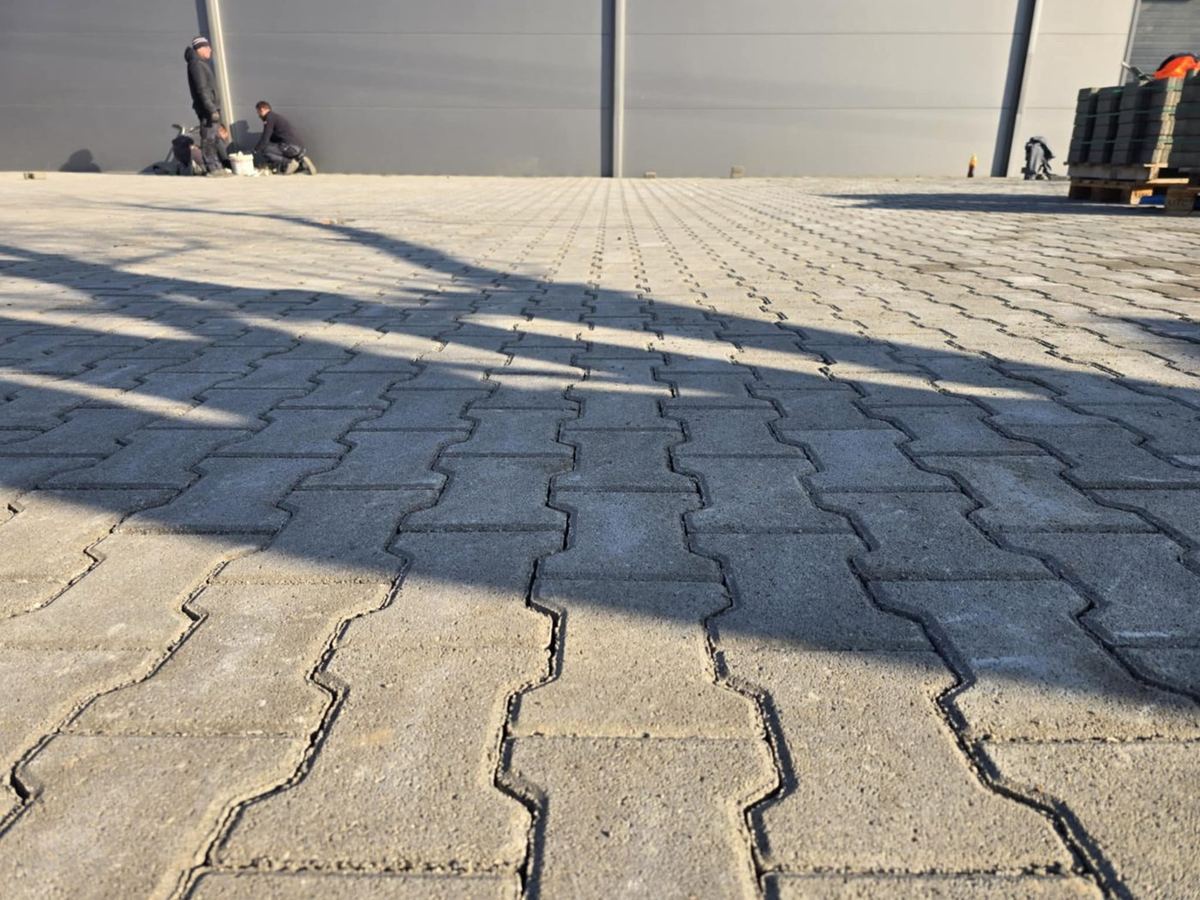
Finished double-T pavers with sand in the joints
Rectangular block paved driveway in grey-brown tones
Dark grey large-format paved yard

Projects · Gallery

Areas we cover

Block paving in AlgarroboNew paving and replacement of old outdoor surfaces in Algarrobo, from photos to finished joints.Block paving in BenalmádenaPrivate and community paving in Arroyo de la Miel, Benalmádena Costa, Torrequebrada and the rest of Benalmádena.Paving in CasaresStone, clay and concrete paving for homes in Casares, Casares Costa and Secadero.Block paving in EsteponaNew paving, kerbs and replacements for homes across Estepona's urbanisations.Block paving in FuengirolaEntrances, patios, side passages and drives in Fuengirola, from Los Boliches to El Higuerón.Block paving in ManilvaDriveways, grass grids and replacements in Sabinillas, Duquesa, La Chullera and Alcorrín.Block paving in MarbellaEnglish-speaking paving contractor based in Marbella, working from San Pedro to Cabopino.Block paving in MijasDrives, paths and terraces on sloping and level plots from Mijas Pueblo to La Cala.Block paving in Málaga cityCourtyards, entrances and drives in every district of Málaga, with English-speaking contact.Block paving in NerjaStone, clay and concrete paving for homes in Nerja and Maro, quoted stage by stage.Block paving in Rincón de la VictoriaPatterns, formats and new paving for homes in La Cala del Moral, Benagalbón, Añoreta and Parque Victoria.Block paving in TorremolinosHomes, apartment blocks and business frontages in La Carihuela, Montemar, Playamar and El Pinillo.Block paving in TorroxBase, edges and pavers for homes in Torrox, Torrox Costa, El Morche and Torrox Park.Block paving in Vélez-MálagaVillage homes and country plots across Torre del Mar, Caleta de Vélez, Cajiz, Lagos and the rest of Vélez-Málaga.Block paving in Alhaurín el GrandePaving, kerbs and honest advice for homes in Alhaurín el Grande, Villafranco and Alhaurín Golf.Block paving in Alhaurín de la TorreRepair, renovation or replacement of paving in El Romeral, Zapata, Pinos de Alhaurín and across Alhaurín de la Torre.Block paving in CoínFrom first photo to handover: paving jobs in Coín, Las Delicias, Miravalle-Los Montecillos and El Rodeo.Block paving in BenahavísPaving packages for villa projects in La Zagaleta, La Quinta, Montemayor and across Benahavís.Block paving in OjénDrives, paths and stone paving for homes in Ojén, La Mairena, El Vicario and Palo Alto.Block paving in RondaStone setts, clay and concrete paving for courtyards, drives and country houses in Ronda.Antequera comarcaBlock paving in Antequera, Mollina, Humilladero, Fuente de Piedra and the rest of the comarca.AxarquíaBlock paving in all 31 municipalities of the Axarquía, coastal and inland.Costa del Sol OccidentalBlock paving in Benahavís, Benalmádena, Casares, Estepona, Fuengirola, Manilva, Marbella, Mijas and Torremolinos.GuadaltebaBlock paving in Campillos, Teba, Ardales, Almargen, Carratraca, Cañete la Real and Serrato.Málaga-Costa del SolBlock paving in every district of the city of Málaga, the only municipality of this comarca.NorormaBlock paving in Archidona, Cuevas Bajas, Cuevas de San Marcos and the four Villanueva municipalities.Serranía de RondaBlock paving and stone in Ronda, Gaucín and the 22 other municipalities of the Serranía.Sierra de las NievesBlock paving in Istán, Monda, Tolox, Guaro, Ojén, Alozaina, Casarabonela and Yunquera.Valle del GuadalhorceBlock paving in Cártama, Álora, Pizarra, Coín, Almogía, the two Alhaurínes and Valle de Abdalajís.

Guides and articles

Layers and base under block pavingA plain-English walk through every layer under a paved driveway or patio, and when a concrete base makes sense.Compaction and falls for pavingWhy compaction in layers and well-planned falls decide whether a paved surface stays level and drains properly.Block paving laying patternsHerringbone, stretcher bond, basketweave and multi-size layouts compared for strength, look and practicality.Paving materials comparedHow concrete, natural stone, clay and permeable paving differ, and how they compare with tarmac, resin and stamped concrete.Permits and rules for paving workLicences, responsible declarations, community approval, waste and safety rules for paving work in Málaga province.Choosing a paving contractorA practical checklist for foreign owners hiring a block paving installer in Málaga province, with the questions worth asking.What a paving quote should listThe line items to look for in a Spanish block paving quote and how to compare offers fairly from abroad.Cheap paving vs properly builtWhere budget paving cuts corners, why it looks fine at first, and what it means a few winters later.Mistakes when hiring a paving firmNine common errors foreign owners make when hiring paving work in Spain, and how to sidestep each one.When block paving is the wrong choiceAn honest look at the plots and problems where new block paving is not the best solution.Block paving or stamped concrete?How the two most common villa surfaces in Spain compare on repairs, looks, water and upkeep.Concrete, stone or clay pavers?Six typical Costa del Sol properties and the paving material that tends to suit each one.Paving from abroad: survey to handoverThe honest step-by-step process of a block paving job for owners who are not in Spain while it happens.What owners wish they knewThe practical surprises of a block paving job, explained before they happen rather than after.Who block paving suitsOwner profiles for whom block paving is a strong fit, and those who may prefer another option.Paving installer checklistA stage-by-stage checklist to keep at hand when choosing and working with a block paving installer.

Frequently asked questions

What is block paving?

Block paving is a floor built from small individual units, usually concrete, natural stone or clay, laid on a compacted base and a thin bed, with sand in the joints. The blocks lock together through friction and edge restraint, so the surface stays flexible and can be lifted and relaid in sections.

Do you work everywhere in Málaga province?

Yes. We cover the coast from Manilva to Nerja, Málaga city and the inland comarcas such as the Guadalhorce Valley, Antequera, the Serranía de Ronda and the Sierra de las Nieves. Access for deliveries is planned case by case, especially on hillside and rural plots.

Can I deal with you entirely in English?

Yes. Questions, quotes, decisions and photo updates can all be handled in English by message or email. Spanish is used where it is needed, for example when speaking with a community administrator or neighbours, and we can explain those conversations to you afterwards.

Can the work go ahead while I am not in Spain?

It can, provided access is arranged and someone can open the property if needed. You approve the quote and key choices remotely, and receive photos at each important stage, including the compacted base and edging before they are covered by the paving.

What information do you need for a first estimate?

A few clear photos of the area, the approximate square metres, the town or urbanisation, and a note on access for vehicles. If you know what is under the current surface or where water collects after rain, mention it, because both affect the build-up and the quote.

Do you only lay concrete pavers?

No. We lay concrete block paving, natural stone setts and slabs, crazy paving, clay pavers, permeable blocks and concrete grass grids, together with the kerbs and base that go with them. We also pour new stamped concrete (hormigón impreso) and lay asphalt. The choice is made according to use, drainage and the style of the property.

Why does my existing paving keep sinking?

In most cases the base beneath it is too thin, was not compacted properly or is being washed out by water. Trenches for services and tree roots are other common causes. Our sister site for sunken paving repair focuses on diagnosing and correcting exactly this problem.

Is a concrete base always better than a granular one?

Not always. A compacted granular sub-base drains and flexes, and suits most domestic paving. A concrete or soil-cement layer adds stiffness where loads or ground conditions call for it, but it changes how water must be removed. The decision is made for each site.

Do I need a licence to pave my drive?

Many minor paving works in Andalusia fall under a responsible declaration rather than a full licence, under Law 7/2021 (LISTA), but each town hall's ordinance decides. Which procedure applies to your specific job is something to confirm with your town hall before work starts.

What happens if the work affects the public pavement?

If the job touches the public pavement or involves dropping the kerb for a vehicle crossing, a separate municipal authorisation is needed. The exact procedure is set by each town hall's ordinance and should be checked before the work is booked.

Does a community of owners need to approve paving work?

If the paving is a common element, such as a shared path or communal parking, the owners' meeting must approve it under the majority rules of article 17 of the Horizontal Property Law. Your community administrator can confirm which majority applies to your particular job.

What happens to the old paving and rubble?

Rubble from lifting paving is construction and demolition waste and must go to an authorised route. Spanish law treats rubble from minor domestic works as household waste under municipal responsibility. How it is removed and where it goes is included as a separate line in the quote.

Why are there no prices on this website?

To keep figures consistent, all prices for the network are published on one dedicated site, together with a cost calculator. This site focuses on materials, base and method, and links to the price pages whenever a cost question comes up.

Which paving pattern is best for a driveway?

Herringbone patterns are widely used on drives because the interlock resists the turning and braking of cars. Stretcher bond and other patterns can work well with suitable edging and base. Our guide to laying patterns compares the common options and where each one fits.

Can new paving be laid over old paving?

Laying blocks directly on top of old paving is rarely a good idea, because levels rise against doors and drains and the old surface may hide a failing base. Normally the old layer is lifted, the base checked and new paving laid on a correctly prepared bed.

Can faded paving be renovated instead of replaced?

If the paving is level and sound but tired-looking, a renovation can be an option: pressure cleaning, filling cracks and applying a tinted acrylic resin in two coats. That service is covered by our sister site for surface renovation without replacement.

Do you design projects or handle planning applications?

No. We are a contractor that executes paving works. We do not draft architectural projects, geotechnical studies or planning applications, although we can describe the planned work clearly in writing so that you, your architect or your administrator can complete the paperwork.

Is paving around a pool different from paving a drive?

Yes. A pool surround must cope with wet bare feet, so slip resistance becomes a key concern, and the Spanish Building Code sets requirements for pool surrounds within its scope. Our sister site for terraces and pools explains these points in detail.

Who will I actually be dealing with?

You deal with the self-employed contractor who runs all six websites in this network, based in Marbella. The same person handles the visit, the quote and the follow-up, so there is a single point of contact from the first photo to handover.

How do I ask for a quote?

Use the form on this page or send a message with photos of the area and its approximate square metres. We reply with any questions, arrange a visit if the job needs one, and then send a written quote that you can compare with others line by line.

Get a quote

Send us a photo and the approximate m² – free, no-obligation quote

Problem (tick one or more) *
WhatsApp
WhatsApp